

3 min read
This is one of the most common misconceptions among NRIs.
A lot of people assume that once they move abroad, they are no longer connected to the Indian tax system. But in reality, your place of residence and your source of income are two different things. Even if you are now fully settled in the UK or the US, you may still need to file an income tax return in India if you continue to earn income that arises there.
That could include:
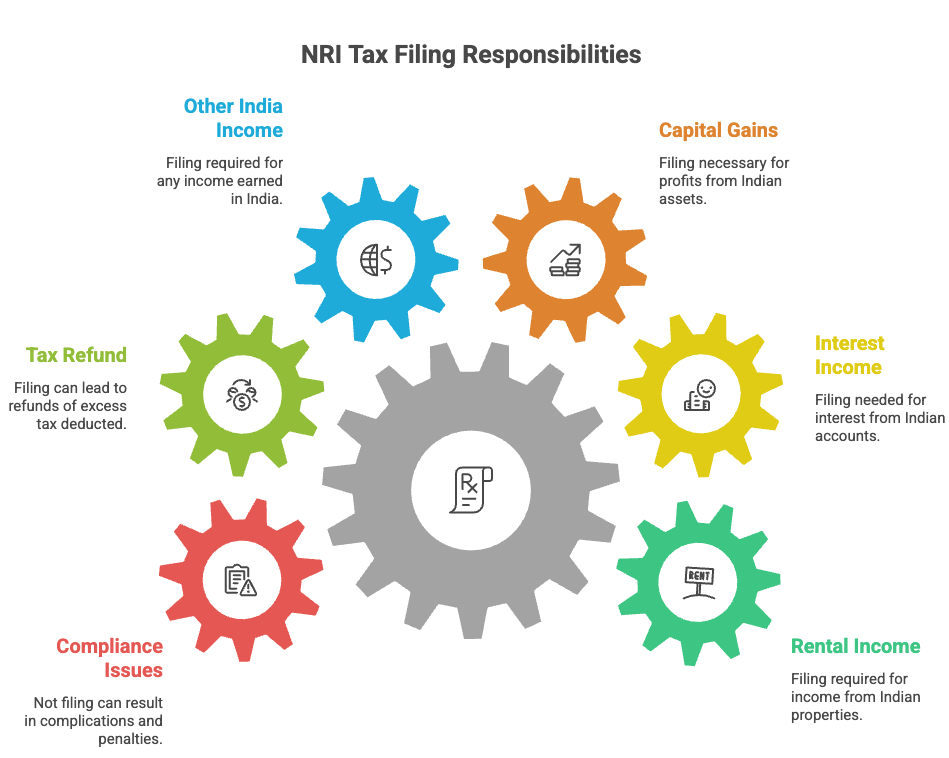
• Rental income from a flat, house, or commercial property in India
• Interest income from NRO accounts, fixed deposits, or certain other India-based savings and investments
• Capital gains from selling property, shares, mutual funds, or other assets in India
• Family-owned income streams or business income where you still have a taxable connection
• Other India-based receipts that may still need to be reported properly
This is where many NRIs get caught out.
They think, “I live overseas now, so surely I do not need to worry about tax filing in India anymore.” But if you still have financial ties to India, the situation is rarely that simple.
In many cases, tax is already deducted before the money reaches you. For example, your bank may deduct TDS on certain forms of interest income. A tenant or property manager may deduct tax before paying rent. If you sell property in India, the buyer may deduct tax at source. Many people assume that once this deduction has happened, the matter is closed.
But that is not always true.
Sometimes, even if tax has already been deducted, you may still need to file a return because your income needs to be formally reported. In other cases, filing may actually help you because the tax deducted may be higher than your actual tax liability, which could mean you are entitled to a refund.
This is especially important because NRIs often face situations where tax is deducted conservatively or at a higher rate, simply because the payer wants to ensure compliance. Unless you review the full picture properly, you may end up paying more tax than necessary or leaving a refund unclaimed.
There is also another side to this.
Filing is not only about paying tax. It is also about keeping your records clean.
If you continue to hold property in India, receive regular rent, redeem investments, or sell assets, your tax filings form part of your overall financial paper trail. This can become important later when you need to explain the movement of funds, claim tax treaty relief, repatriate money abroad, or respond to queries from banks, buyers, or tax authorities.
For many NRIs, the issue is not deliberate non-compliance. It is simply lack of clarity.
You may be earning from India without realising that it creates a filing requirement. Or you may assume that because the amount feels small, it does not matter. Or you may think that if tax has been deducted already, there is nothing further to do. These assumptions are very common, but they can lead to missed refunds, penalties, or unnecessary stress later.
The key takeaway is simple:
Living abroad changes your residential tax position, but it does not automatically end your tax obligations in India.
If you are based in the UK or the US and still have income, property, investments, deposits, or any ongoing financial links with India, it is worth checking your filing position properly rather than relying on guesswork.
A simple review today can help you avoid compliance issues tomorrow, and in some cases, it could even put money back in your pocket.