
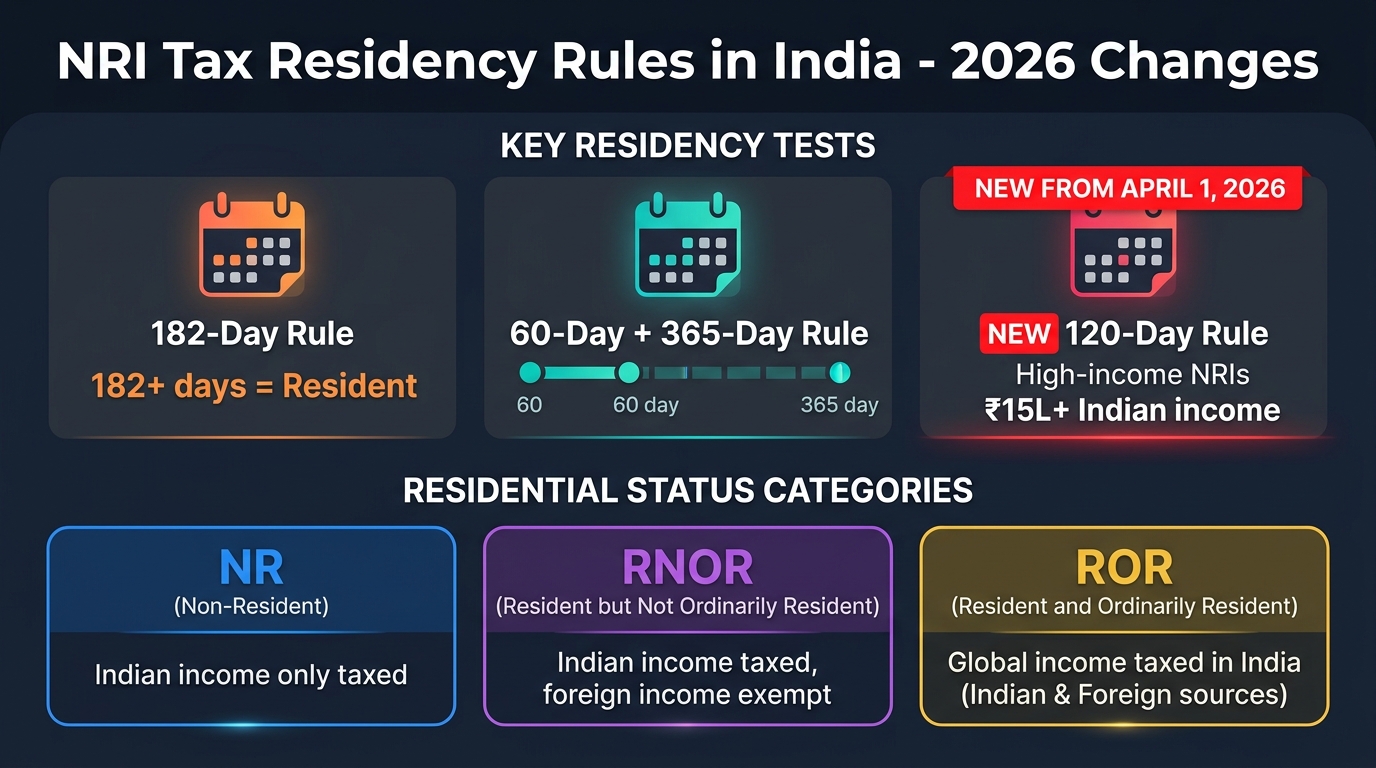
The tax residency rules for Non-Resident Indians (NRIs) in India will undergo significant changes starting April 1, 2026, as introduced by the Income Tax Bill 2025. These changes primarily affect high-income NRIs and Persons of Indian Origin (PIOs). Here’s a detailed breakdown and impact of these new rules.
Determining NRI Status
The residency status, which dictates tax liability in India, is determined by:
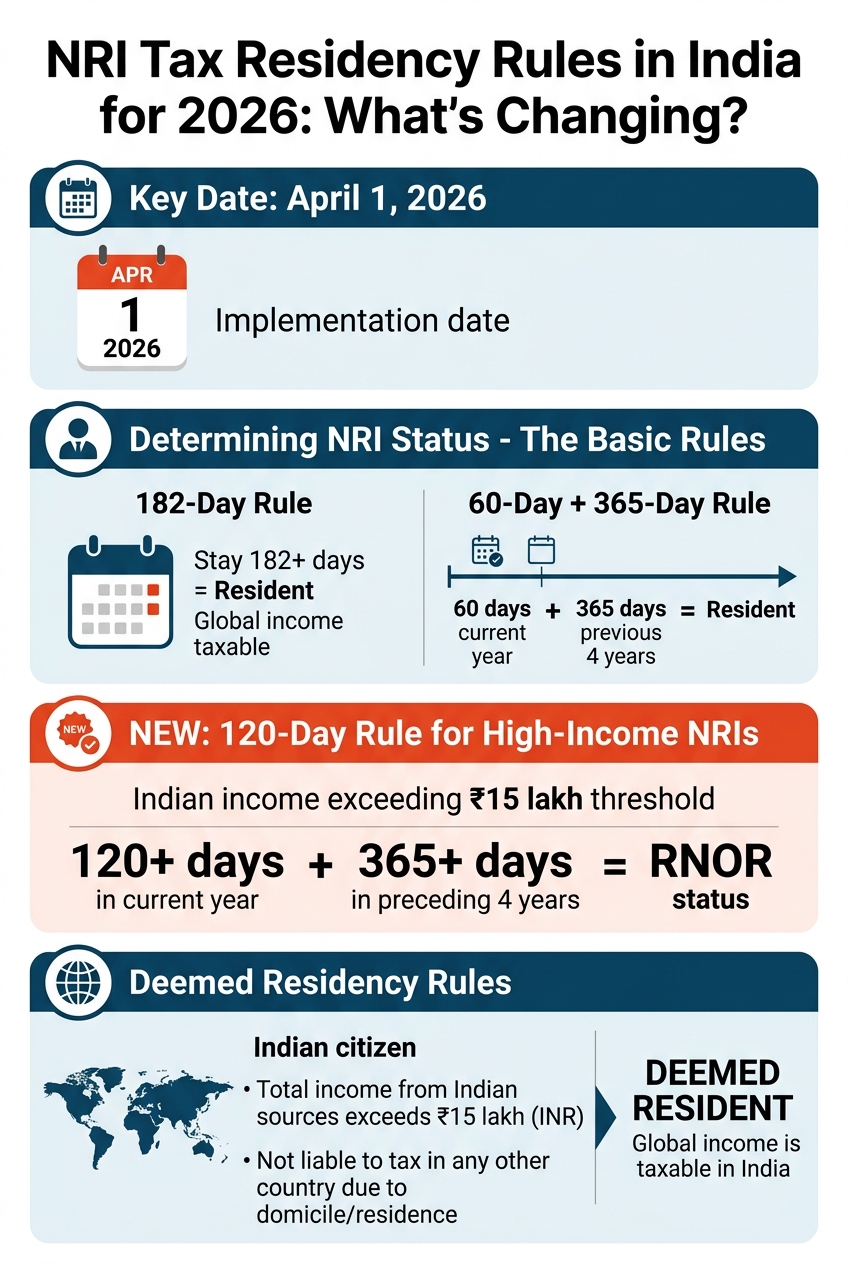
- 182-Day Rule: Any individual who stays in India for 182 days or more during a financial year qualifies as a resident. This rule remains unchanged and is crucial because once classified as a resident, an individual’s global income becomes taxable in India.
- 60-Day + 365-Day Rule: If an individual stays in India for 60 days or more in a financial year and 365 days or more over the preceding four years, they could also be classified as a resident. However, after 2026, for those with Indian income exceeding ₹15 lakh, the 60-day condition changes to 120 days.
New 120-Day Rule for High-Income NRIs
From April 1, 2026, if an NRI or PIO has an Indian income (excluding foreign sources) exceeding ₹15 lakh, they are classified as Resident but Not Ordinarily Resident (RNOR) if they stay in India for 120 days or more in the financial year and have stayed for 365 days or more in the preceding four years. This targets high-net-worth individuals who maintain substantial ties with India.
Deemed Residency for “Stateless” Indians
Under the deemed residency rules, Indian citizens earning ₹15 lakh or more from Indian sources who are not liable to pay tax in any other country are considered residents. This is particularly relevant for individuals in tax-free jurisdictions like the UAE or Monaco. These individuals are classified as RNOR, meaning their foreign income remains exempt from Indian tax, but their Indian income is fully taxable.
Categories of Residential Status
- Non-Resident (NR): Taxable only on Indian-sourced income.
- Resident but Not Ordinarily Resident (RNOR): Indian income is taxed; foreign income is generally exempt unless derived from specific business links to India.
- Resident and Ordinarily Resident (ROR): Taxed on global income regardless of origin.
Impact on Non-Resident Indians
Taxation Scope:
- NRIs: Only India-sourced income is taxed. This includes salaries for services rendered in India, rental income from Indian properties, and capital gains on Indian assets.
- RNORs: Similar to NRIs for foreign income; however, income from businesses controlled in or professions set up in India is taxed.
- RORs: Global income is taxable in India.
Compliance and Planning:
These rules necessitate meticulous tracking of days spent in India to avoid breaching the residency thresholds. High-income NRIs must evaluate and adjust their financial activities in India to minimize their global tax exposure. Leveraging Double Taxation Avoidance Agreements (DTAAs) can also help mitigate double taxation issues.
Additional Reforms in Budget 2026–27:
The budget introduces reforms affecting NRIs:
- Property Transactions: Simplified with TDS deductions using PAN from October 1, 2026.
- Foreign Asset Disclosure Scheme (FAST-DS 2026): A six-month window to declare previously undisclosed assets with reduced penalties.
- Remittance TCS Reductions: From 5% to 2% for travel packages and educational remittances under the Liberalised Remittance Scheme.